

 2026-08-28
 Author:Danube machine
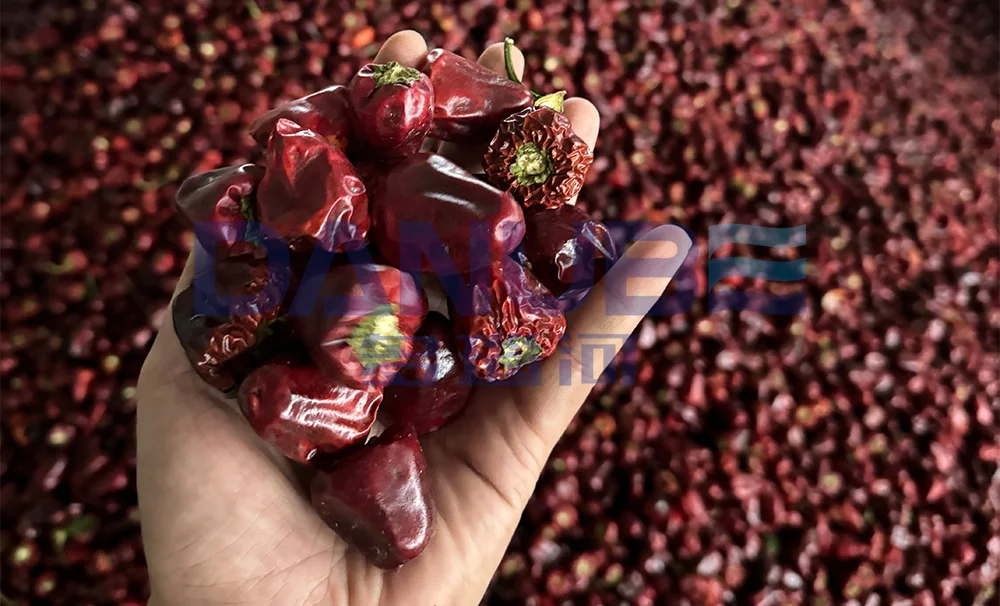
Chili drying machines are one of the key pieces of equipment in chili processing. They not only reduce the moisture content of chili, preserving their color, aroma, and flavor, but also extend their shelf life. Compared to natural sun drying, chili drying machines offer better drying conditions and higher efficiency.
Chili Drying Process
After washing and sorting, chili enter the drying machine for drying. During the drying process, the temperature, airflow, and drying time can be adjusted according to the variety and moisture content of the chili. After drying, the finished product is cooled and packaged for storage or further processing.
Different types of drying machines are suitable for different production scales.
**Mesh Belt Chili Dryer**
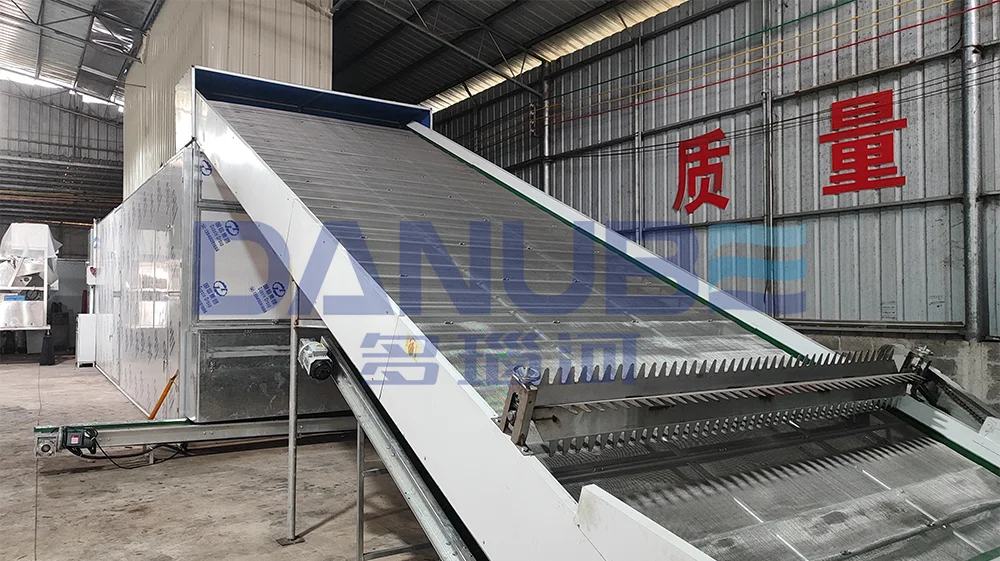
A continuous hot air dryer suitable for medium to large-scale production. Chili pass evenly through multiple drying sections; temperature and airflow are adjustable for a more uniform drying effect.
**Chili Drying Room**
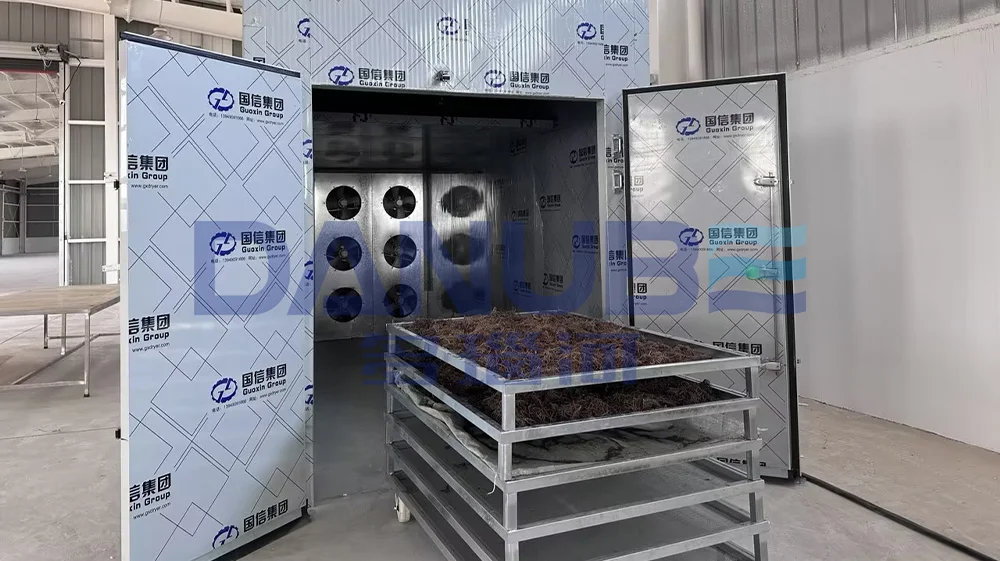
A flexible option suitable for small-batch or large-batch production. Hot air circulates within the drying chamber, gradually removing moisture from the chili.
**Microwave Chili Dryer**
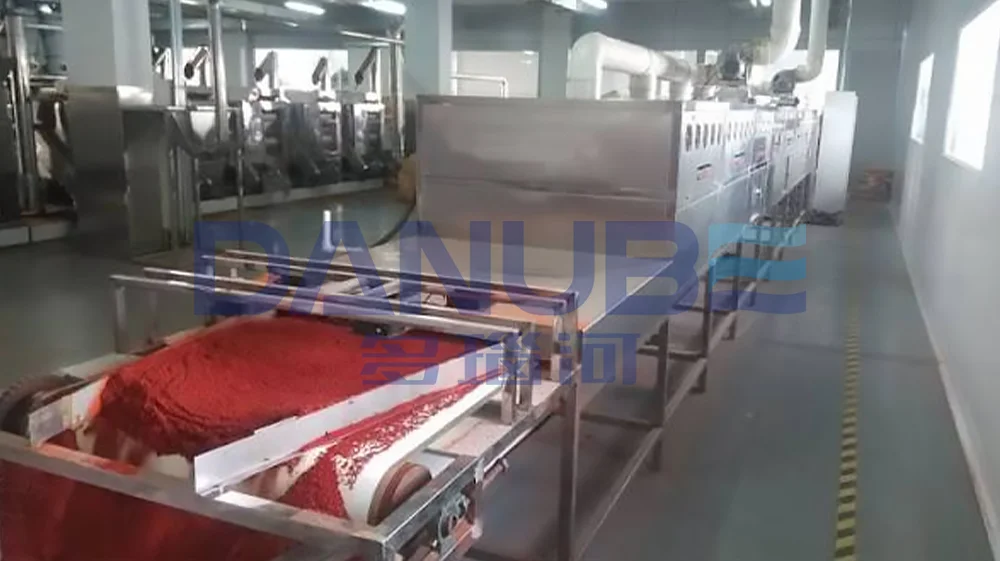
Microwave technology heats the material from the inside, removing moisture more quickly. Microwave dryers are recommended when high drying efficiency is required.
How to Choose a Chili Dryer?
The appropriate dryer depends on the type of chili, initial and final moisture content, required processing capacity, available energy, and production method. For continuous commercial production, a mesh belt chili dryer is often a practical choice. Drying chambers may be more suitable for small-batch production, while microwave dryers can be used for specialized applications.
How Long Does Chili Drying Take?
Chili drying time is not fixed. Depending on the variety, size, moisture content, loading thickness, drying temperature, and equipment, the drying process can take several hours. Appropriate drying temperatures and airflow rates should be selected to avoid over-drying or uneven moisture distribution.
For commercial projects, it is recommended to conduct actual tests on the chilies before finalizing the drying equipment. This helps determine the appropriate drying temperature, residence time, and equipment capacity.
How Do You Correctly Choose A Mango Dryer?
09-24Nut Dryer: An Efficient Hot-Air Circulation Drying Solution
09-11How to Dry Garlic Slices? Garlic Slice Drying Processes and Equipment in Food Processing
08-28How to Dry Chili? Chili Drying Machines, Drying Time, and Process
08-14Why Use a Continuous Dryer for Fruits and Vegetables?


